
October 2026 Election Guidance
Public Transit Alliance of BC: Local and Provincial Candidates Can Gain Votes By Supporting Public Transit
MEDIA RELEASE
Contact: Todd Litman, litman@vtpi.org, 250-508-5150
Release Date: 12 October 2026
It is time to improve transportation for everybody in British Columbia, including non-drivers, according to the Public Transit Alliance of BC.
In a typical community about a third of travellers cannot, should not or prefer not to drive, including people with disabilities and low income, youths and seniors, tourists, and motorists who dislike driving in busy traffic. This is an important but overlooked voting bloc according to the Public Transit Alliance of BC, a new organization that advocates for better travel options throughout British Columbia.
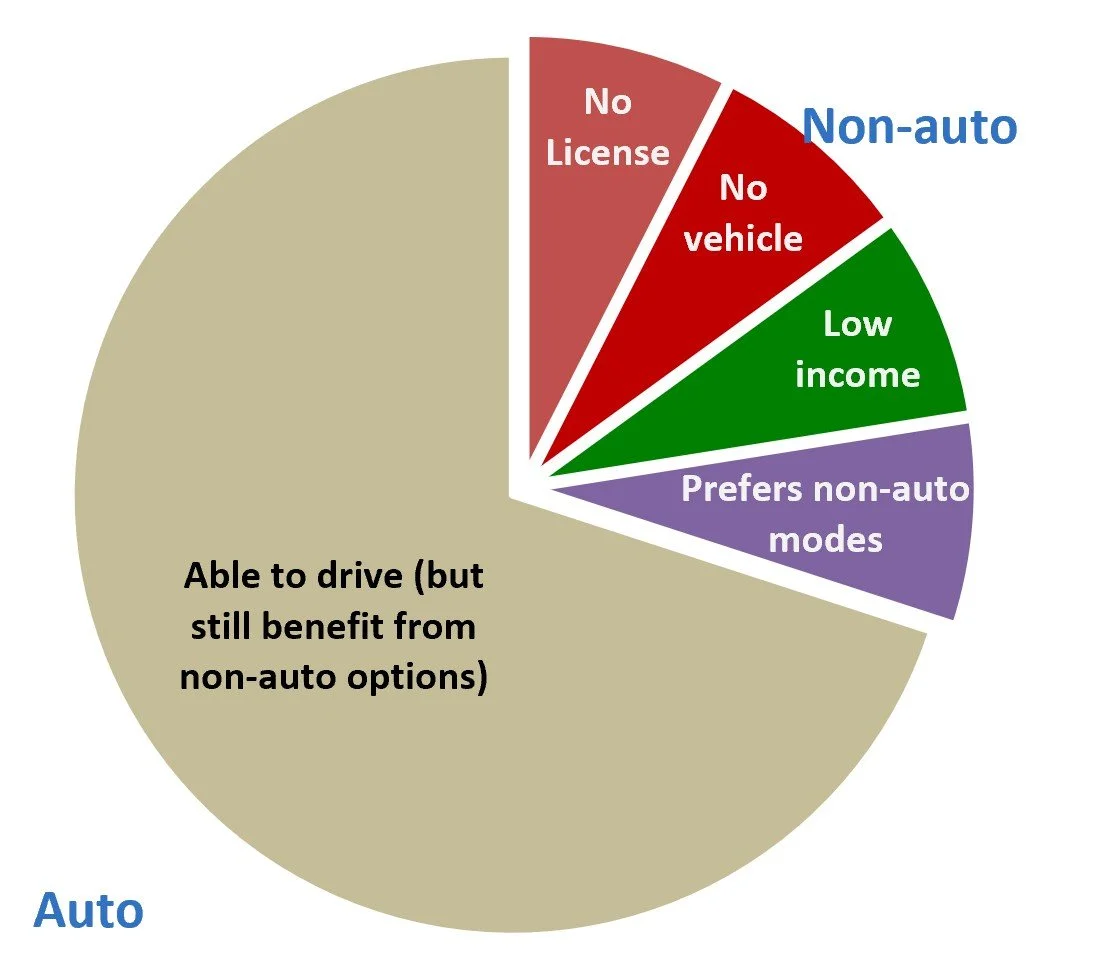
In a typical community, 20-40% of travellers cannot, should not or prefer not to drive and will use non-auto modes if they are convenient, comfortable and affordable. These include people with disabilities or low incomes, youths, visitors, drivers whose vehicle is unavailable or dislike driving on busy roads, law abiding drinkers, and people who prefer active modes (walking and bicycling) for health or enjoyment sake.
“Local and provincial candidates can gain votes by supporting public transit,” says PTABC spokesman Todd Litman. “More than a million British Columbians rely on transit or have family members who do, and everybody benefits from high-quality transit that reduces traffic problems.”
British Columbia’s transportation system fails to serve non-drivers and rural communities. Provincial highways connect communities for motorists, and local transit agencies provide mobility within cities, but few highways have adequate, affordable public transit services, making much of BC inaccessible without a car. This is wasteful and unfair.
“Transit riders are accustomed to waiting, but the NDP and Conservatives are leaving their public transit promises until very late in the campaign” said Keith Wiley, a co-founder of West Kootenay Transit Action and a Public Transit Alliance board member. “Rural non-drivers have trouble accessing healthcare, schools and stores, and soaring fuel prices burden motorists. Better public transit improves their economic opportunities and saves money.”
“We’ve done the math and the results are clear; public transit improvements are often the most cost effective and equitable way to reduce improve transportation and fairness,” explains Litman. “Frequent and affordable transit service can reduce traffic problems, avoiding the need for costly highway expansions, while providing independent mobility for non-drivers, and protecting community livability.”
Public transit investments often repay their costs in savings and economic development. High-quality transit reduces traffic congestion and parking problems, which save on infrastructure costs, and it reduces accidents, which saves on medical and disability expenses. Every year the Ministry of Health spends millions of dollars on special taxi services to transport rural patients to routine medical appointments, trips that would be far cheaper by public transit. Convenient public transit allows rural communities to attract more tourists, and rural residents to access education, jobs, affordable shopping, and social activities.
Public Transit Policy Recommendations
The PTABC asks politicians and political parties to support the following policies.
Multimodal targets – Support existing provincial targets for 30% non-auto mode shares by 2030 to reduce traffic problems and support economic, social and environmental goals.
Improve public transit funding – Increase provincial funding to finance at least 25% increase in transit services by 2030. Create sustainable regional and local funding options.
Create an intercity bus network – Establish a provincial interregional bus network connecting communities throughout BC, with realistic local funding, as with the Highway 16 Five Point Plan.
Provide more integrated services – Integrated local and interregional transit services, BC Ferries and airports. Create one provincial public transport information website and map.
Make transit more affordable – Provide need-based fare discounts to make public transportation affordable to everybody.
Prioritize transit – Before expanding highways provide convenient and affordable transit services to reduce traffic problems, improve affordability and fairness, and increase safety.
Create transit-oriented communities – Support local development policies that create compact walkable neighborhoods along frequent transit routes that seamlessly accommodate all users including people with disabilities, families with children and residents with low incomes.
Implement transit improvement in major growth areas – Priority projects include new rapid bus lines in Vancouver and Victoria regions, and SkyTrain extensions to UBC and Langley.
Support multimodal tourism – Improve rural and tourist community travel options to help residents access services, workers reach jobs and visitors explore our province without driving.