We Want Better Island Transit
Our goal is to create convenient and affordable public transportation on the Island.
Frequent and affordable public transit service can provide convenient independent mobility for travellers who cannot, should not, or prefer not to drive on Island highways. It also reduces road congestion, crashes and pollution emissions. It supports local economic development by helping students access school, workers access jobs, businesses access employees and tourists access rural areas. It helps create more livable, equitable and successful communities.
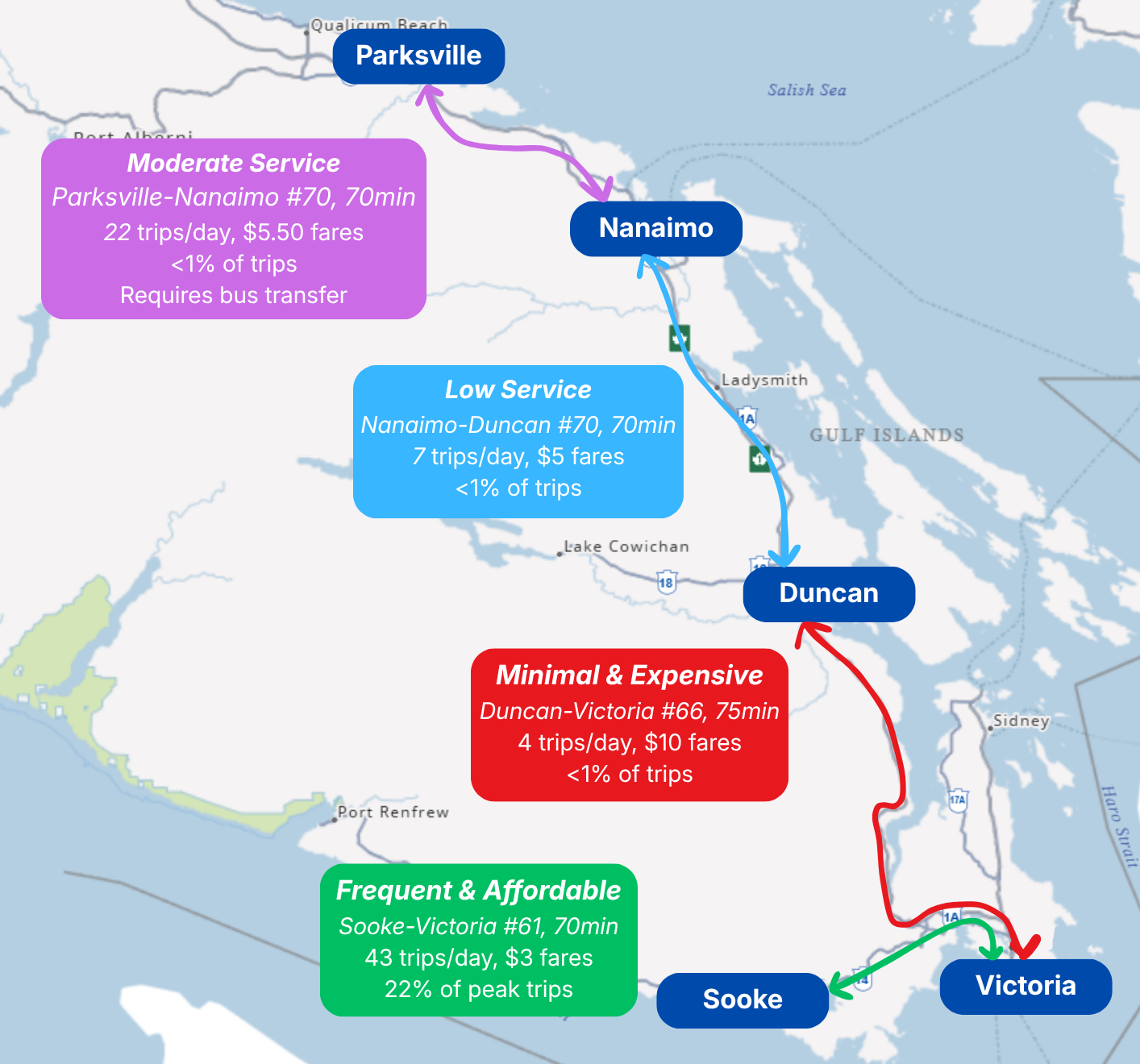
Our short-term goal is to increase frequency and reduce fares for bus service between Duncan and Victoria (#66) and between Duncan and Nanaimo (#70). This will provide convenient and affordable public transportation from central Vancouver Island to Victoria and Sooke. Currently this section of the corridor has the lowest frequency of the corridor, with only 4 commuter trips per direction each day. It also currently the most expensive route, costing $10 per trip (or $20 per day for commuters).
Island Highways Carry 30,000 People per Day
The Island Highway is the main functional route between Victoria and the rest of Vancouver Island. Approximately 30,000 daily travellers currently use the Highway every day, making it a very busy and congested route frequently prone to crashes, flooding, and rockfalls. Expansion of the highway is costly and environmentally damaging, and is likely to provide little long term relief along the corridor.
Most recently, the Ministry of Transportation and Transit was planning on expanding a 1.5km section through Goldstream Provincial park. This expansion would push the road closer to the Goldstream River, an important salmon bearing stream. Opposition from local First Nations and environmental organizations has put this project on pause. Reallocation of the project’s $162 million budget would fund frequent and affordable transit service along the corridor for much larger safety gains and total benefits for years.
Providing Frequent and Affordable Transit is Affordable
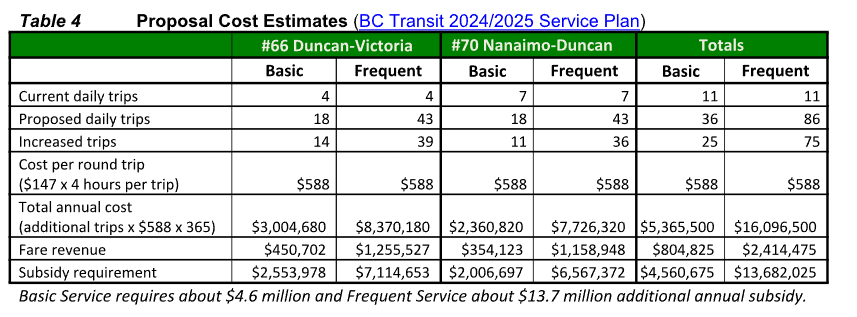
The yearly costs for providing Duncan to Victoria (and Duncan to Nanaimo) with frequent and affordable public transit is substantially more affordable than any highway expansion projects. Estimated costs based off of publicly available BC Transit service data suggest that providing the Duncan-Victoria route with the same amount of frequency as the Sooke-Victoria route (43/day) would only require a yearly subsidy of approximately $6.6 million. If the funding allocated to the Goldstream Expansion ($162M) was reallocated, it would fund the increased frequency for over 23 years.
British Columbia governments spend around $1,000 per capita on roadways, about $400 on local transit services, and less than $5 on interregional transit services.
Inadequate Transit is Unfair to Non-drivers and Rural Communities
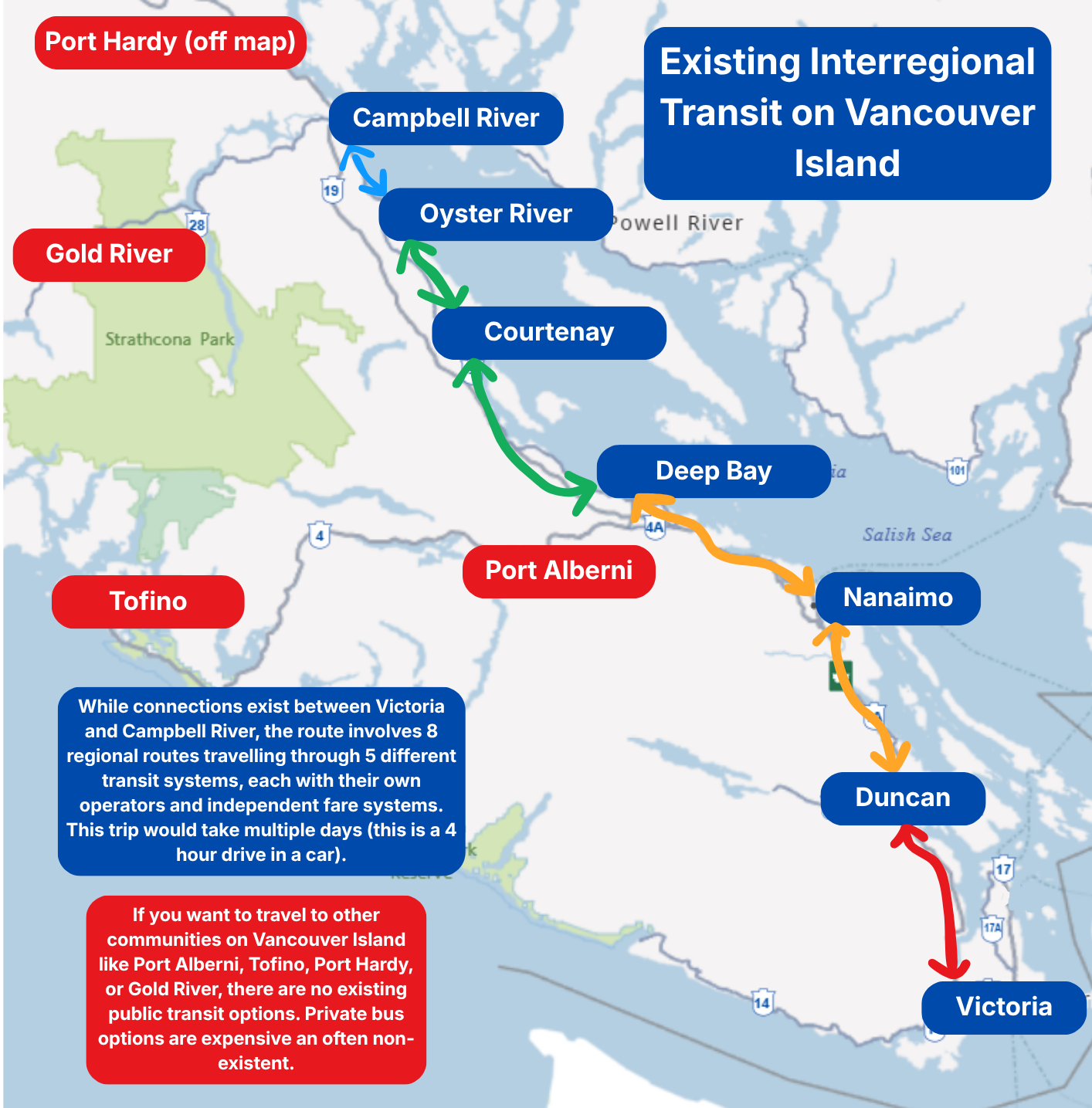
To travel from Victoria to Campbell River requires 7 transfers on public transit, each involving a different fare, schedule, and system. There is no synchronization between systems, so the trip would take at least 4 days. If you wanted to get to (or from) a different community on the Island, such as Port Alberni, Ucluelet, Tofino, Gold River, or Port Hardy, you would have no public options at all.
Creating a public interregional transit service between Island communities would benefit remote communities, tourists, students visiting home over the holidays, and non-drivers. In most communities 20-40% of travellers can not, should not, or prefer not to drive due to age (young or old), disability, lack of vehicle or license, or stress/dislike of driving on highways. Vehicle costs are also rapidly increasing, and many people can not afford the high cost of ownership, repair, and rising gas prices.
Everyone should have the right to travel from community to community, and currently on Vancouver Island that right is only afforded to vehicle drivers.
Build It and They Will Come
Current transit use along the highway is less than 1% of daily travellers. However, research has shown that transit needs to be frequent and affordable for users to choose it as a mode of transport. The current Sooke-Victoria which operates along a similar distance and travel time shows that this is the case on the Island as well. During the peak period 22% of trips are made on the #61 bus, which runs 43 times a day. Users only have to pay the standard Victoria BC Transit fare of $3. During peak buses arrive every 10-20 minutes, and schedules run on at least part of the route from 5am to 1am. In the Fraser Valley, 20-40% of weekday trips are similarly made on transit between towns like Langley and Pitt Meadows and Vancouver.
This consistency and affordability allows users the ability to choose transit as a viable option along the corridor. In comparison, the Duncan-Victoria route operates one tenth less frequently and costs over 3 times more. If the Duncan-Victoria route had a similar transit mode-share as these routes, there would be about 2,000 fewer peak period trips and 3,000 fewer daily vehicle trips over the Malahat, providing significant reductions in traffic problems, crash risks, and costs.
The Province Must Step Up And Fund Frequent, Affordable Transit
Provincial leadership will be integral to planning and funding frequent, affordable bus service between Duncan and Victoria and between Duncan and Nanaimo. This will provide convenient and affordable public transportation from central Vancouver Island to Victoria and Sooke. Specifically, we want the following:
Develop a transit planning and funding agreement between Capital, Cowichan and Nanaimo regional districts, BC Transit and the Ministry of Transportation and Transit
Provide hourly bus service between Duncan and Victoria from approximately 6:00am to midnight, with additional trips during weekday peak hours. Fares no more than two current regional fares ($5.00). Connect with Duncan-to-Nanaimo and Victoria-to-Sooke buses. Implement TDM incentives to encourage ridership.
This service would provide many benefits to users and communities, including benefits to motorists who experience less traffic congestion, crash risk and chauffeuring burdens. It also supports provincial targets to reduce personal vehicle travel by 25% and double walking, bicycling and public transit by 2030. It’s important to note that this is far cheaper and faster to implement than other proposed highway improvements.
We Will Keep Pushing For Better Transit On Vancouver Island
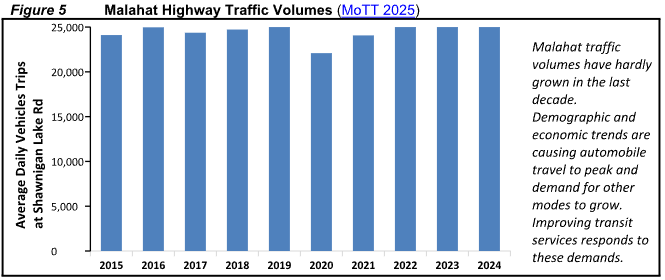
The Island Highway between Victoria and central Vancouver Island is a major congested and dangerous travel corridor. There are frequent calls for improvements to reduce driver stress, delays and crashes. Many travellers want an alternative to driving. Current demographic and economic trends are increasing demands for non-auto modes. Experience elsewhere, including Sooke-Victoria and Fraser Valley corridors indicate that this could attract 20-30% of travel. Frequent and affordable bus service with TDM incentives is by far the most cost-effective and beneficial way to improve mobility and reduce Island Highway traffic problems.
For more information, see Better Island Transit’s Frequent and Affordable Vancouver Island Bus Service Backgrounder (Download Link) and the other documents on the Reports Page.